Growing up in the East, it seemed everyone had African violets on their windowsills or collections of them on nearby tables. Given constant moisture, regular fertilizer and soft light, they bloomed, it seemed, forever.
Timothy Barr depicts a Cape Primrose, a cousin of the African violet, in the deep window ledge of a house in the Brandywine Valley. Although the light is low, casting the soft shadow of the window onto the wall, startlingly, it illuminates the structure of the leaves and the short-lived beauty of the fallen blossom. The radiant luminosity of the painting is attained through layers of glazes he mastered by studying the Barbizon and luminist painters. 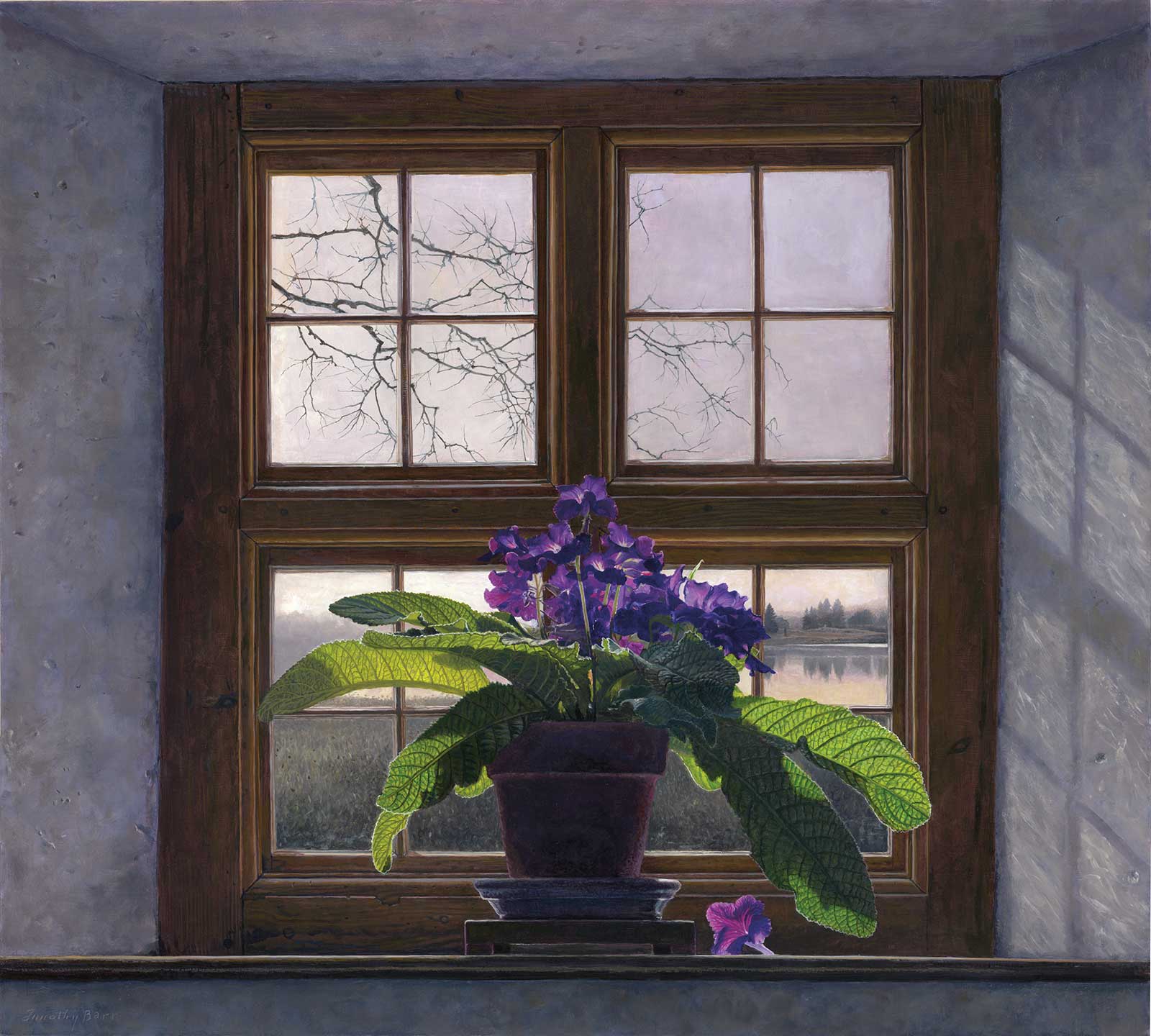 Somerville Manning Gallery, Cape Primrose, oil on panel, 27 x 30", by Timothy Barr.
Skip Steinworth uses graphite pencils to create extraordinarily subtle, timeless still lifes. White Flowers and Glassware depicts white peony buds and blossoms in common kitchen vessels from a tumbler to a canning jar. The peonies are as elegant as in any complex Dutch still life. Steinworth has kept detail in the bright white blossom down to the petals in the receding darkness. Using a material first used in 16th-century Europe, Steinworth says, “The medium has always had a fundamental appeal for me. It’s direct and uncomplicated. As such, it is well suited to my sensibility and to my imagery, style and working methods, all of which are equally straightforward.”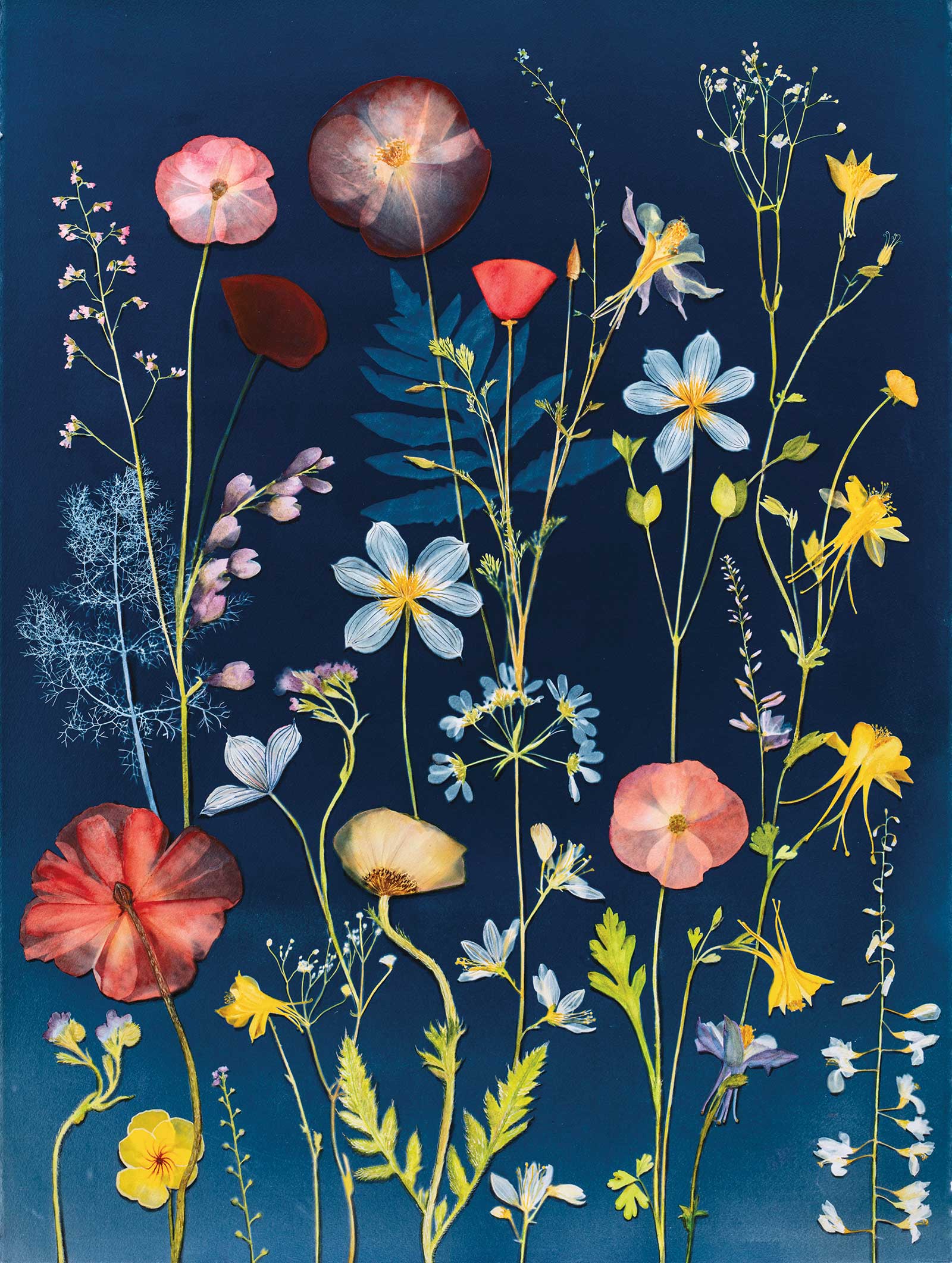 Garvey|Simon, Cyanotype Painting (Poppies, Clematis, Columbine, Ferns, etc.), watercolor, gouache and cyanotype on paper, 33½ x 26" (framed), by Julia Whitney Barnes
 Arden Gallery, Blue Poppy in a Blue and White Chinese Vase, archival pigment print on hand-made Italian rag paper, 30 x 30" also available in 52 x 52" and 58 x 58", by T.M. Glass
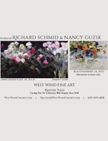
Julia Whitney Barnes uses a photographic printing technique invented in 1842 that produces images with a characteristic cyan blue color. She dries botanical specimens she has gathered in the Hudson River Valley and then arranges them at night. She explains, “In my works on paper, I approach each growing thing with equal importance regardless of whether it is a weed, rare species, wildflower or cultivated flower…I create unique blue and white cyanotype prints onto sheets of cotton paper and then I paint in countless layers of watercolor, gouache and ink. The cyan imagery becomes the underpainting or grisaille, and then I meticulously paint the exposed watercolor paper with a multitude of layers of color. I am most interested in creating objects that feel both beautiful and mysterious. I want each painting to be familiar yet slightly outside of time.”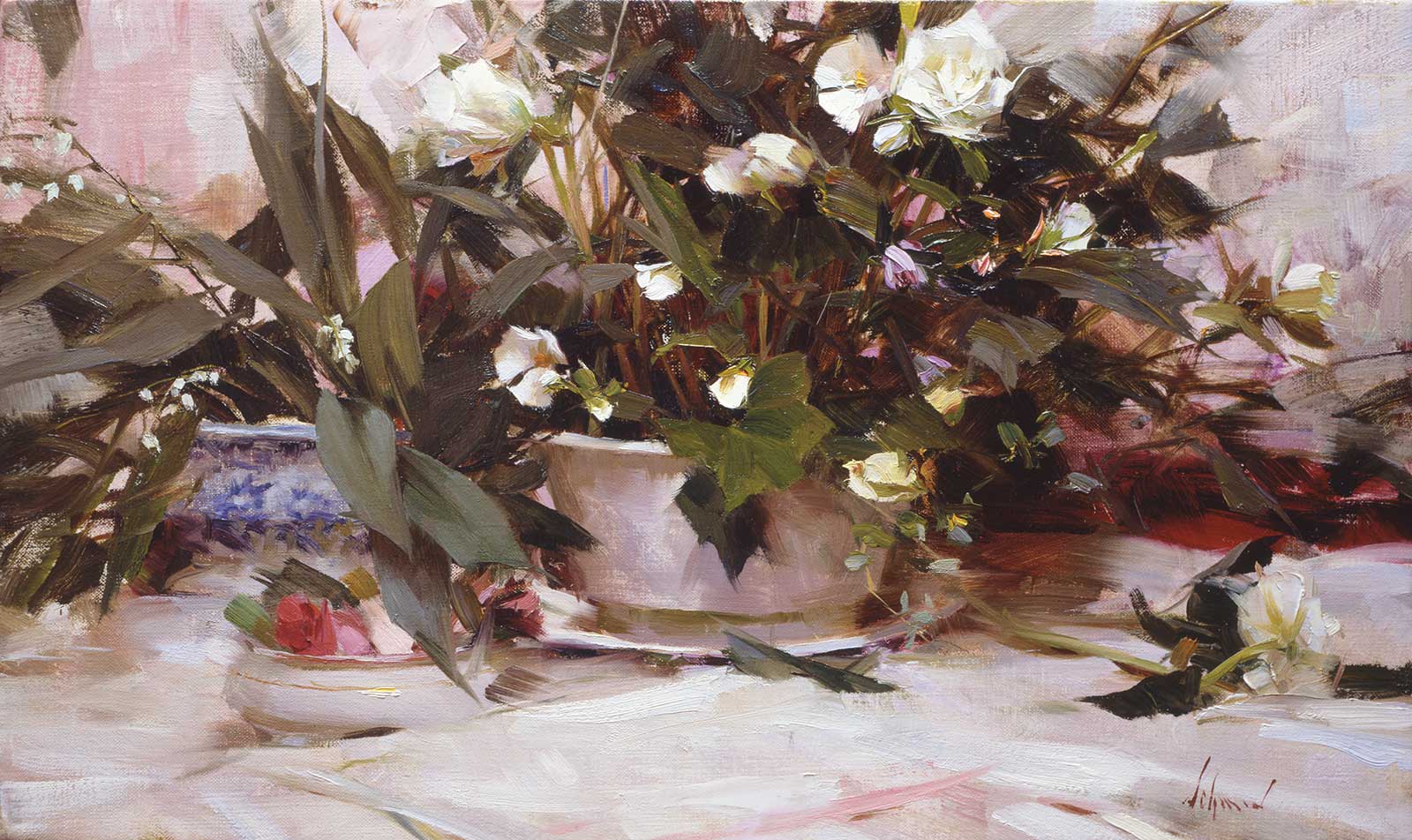 West Wind Fine Art, White Begonias, oil, 12 x 20", by Richard Schmid.
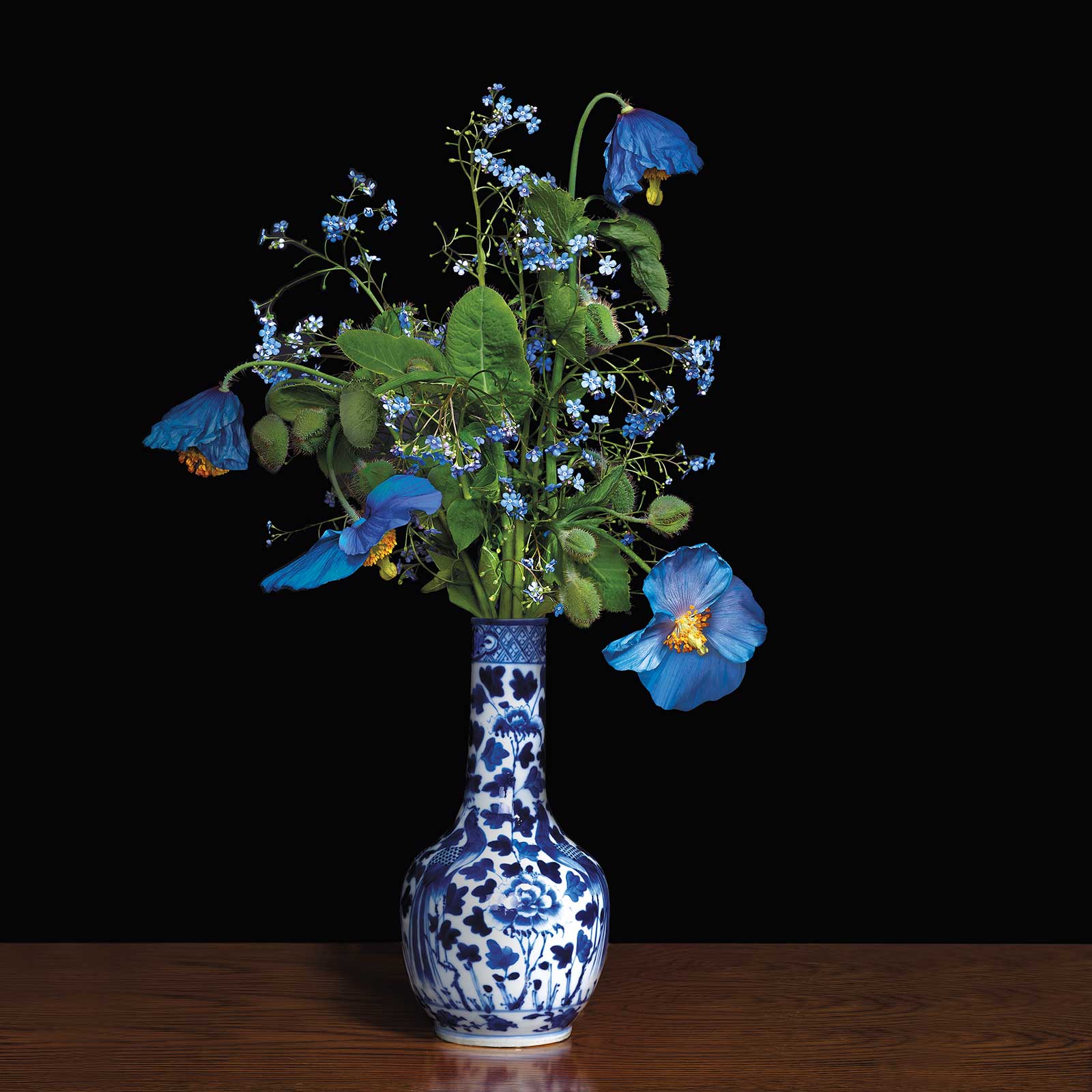
T.M. Glass completely embraces 21st-century technology to create still lifes of timeless beauty. She photographs priceless historic ceramics in museum collections and pairs them digitally with arrangements of flowers gathered from some of the world’s famous gardens. She explains, “In Quebec, I worked with the gardeners at the historic Jardins de Métis and their flowers were arranged in vases from the Jardin’s museum.” In Blue Poppy in a Blue and White Chinese Vase, she combines the garden’s rare Himalayan blue poppies with common forget-me-nots, their blossoms, emerging and spent, arranged in a complex composition. The ephemeral flowers contrast with the antique and enduring vase. What appears at first as a high-resolution, large format, digital photograph slowly reveals itself. Digital brushstrokes soften surfaces and edges, confounding the first impression.
Glass says, “I see digital software and hardware as the latest new tools for artists. I fully embrace the technology and use these digital tools in my work for mixing colors, collaging bits and pieces of images, hand painting with digital paint, adding and subtracting.”
Through the remainder of this section, you’ll hear from artists and galleries on their inspiring, vibrant works featuring florals and botanicals. They also share insights on establishing or adding to a collection on the genre. 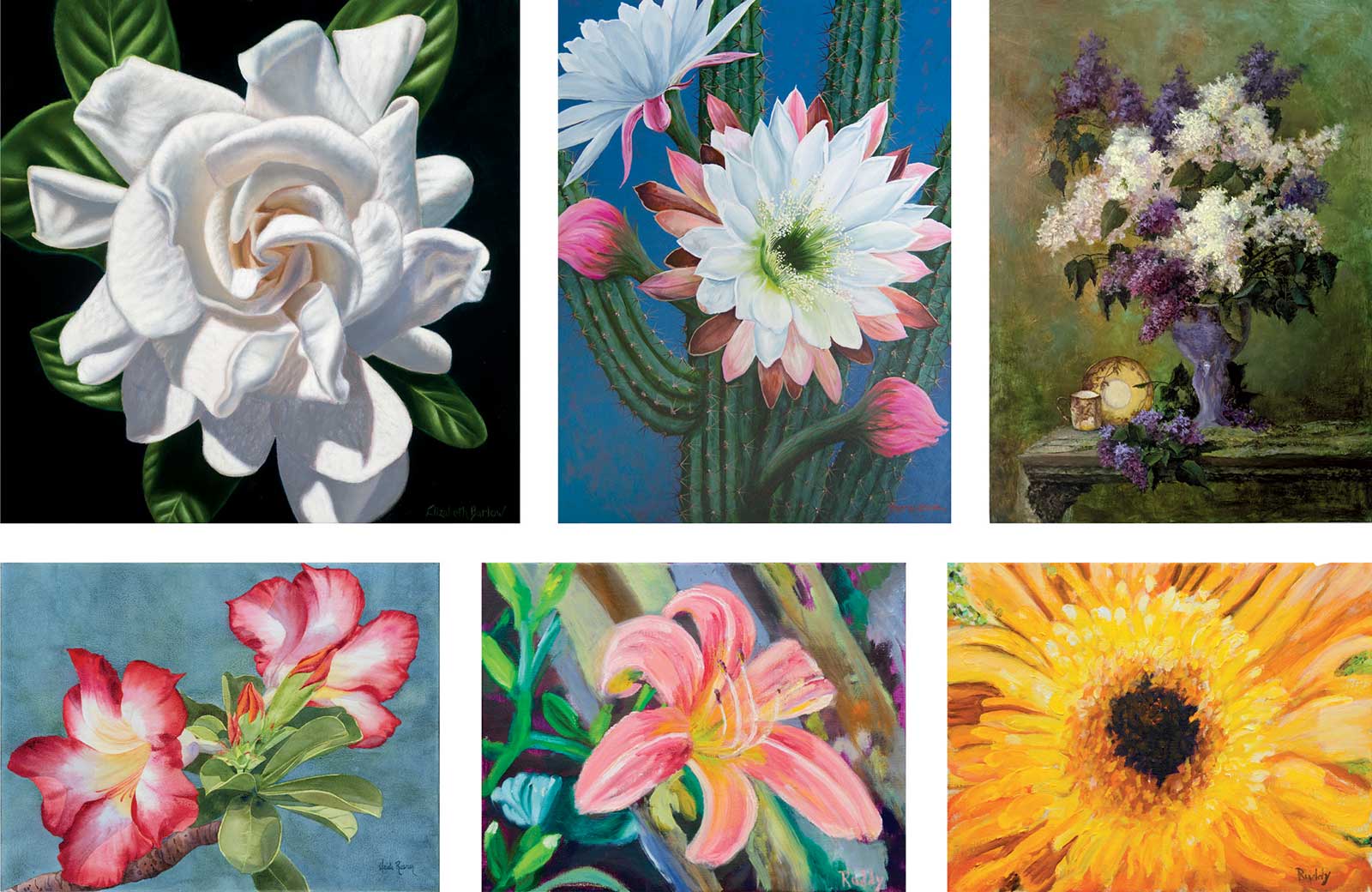 Top row, from left: Elizabeth Barlow, Grace, oil on linen, 12 x 12" ; Celebration of Fine Art, Pretty Woman, acrylic, 40 x 30", by Beth Zink; Lisa Hannick, Study in Viridian and Lilac, oil on board, 24 x 18". Bottom row, from left: Celebration of Fine Art, Rosie, watercolor, 12 x 16", by Heidi Rosner; Sally Ruddy, Day Lily, oil on canvas, 11 x 14"; Sally Ruddy, Gerbera Daisy, oil on canvas, 11 x 14"
Through March 27, at the Celebration of Fine Art juried show in Scottsdale, Arizona, visitors can enjoy a diverse array of exceptional art in an interactive atmosphere. “There’s no place where the art comes to life like the Celebration of Fine Art,” says Susan Morrow Potje, co-owner and show director. “Over the course of our 31-year history, the Celebration of Fine Art has remained a place for artists and art lovers to connect in a meaningful way. And this year, it’s all about discovery and experience. Discovering and experiencing new artists, mediums and artwork. We are thrilled to feature florals from some of the top floral artists in the country including Elizabeth Butler, Heidi Rosner and Beth Zink.”
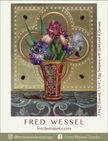
Guests can also catch artist demonstrations of their process; attend an Art Discovery Series, which is held each Friday from 4 p.m. to 5 p.m.; walk the outdoor sculpture garden, featuring nearly 100 pieces of life-sized and monumental sculpture; and enjoy lunch or wine in the cafe. 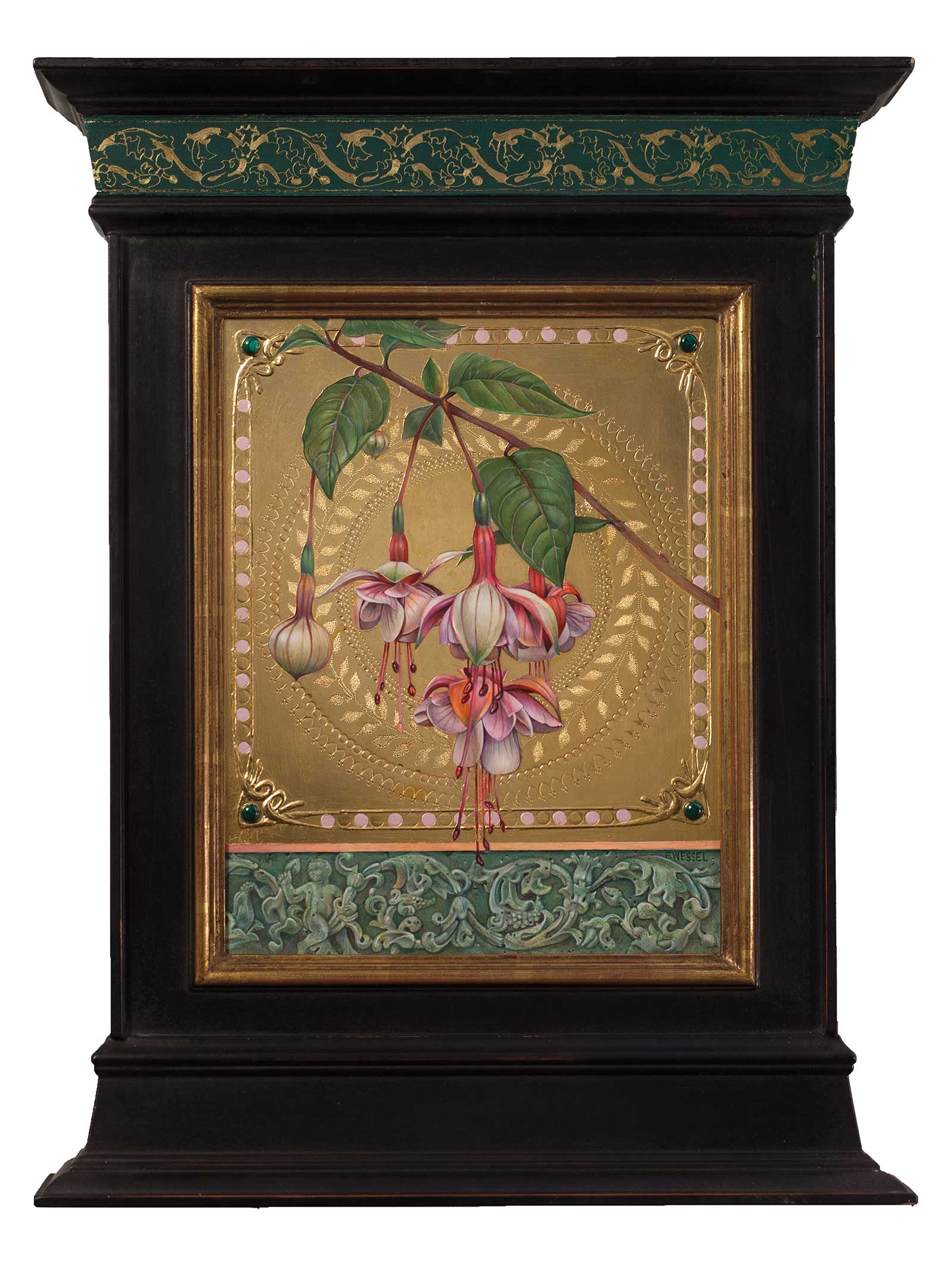 Fred Wessel, Whidbey Fuchsia, egg tempera with gold and silver leaf and malachite cabochons in a sgraffito frame, 14 x 11"
For artist Elizabeth Barlow, flowers are sacred symbols. “Within their fragile forms lie powerful forces of change and rebirth,” she says. “As universal symbols of beauty, they promise that when we observe deeply, we will see into the beautiful mystery that is life, death and reemergence. If we pause in our busy lives to truly look at a flower, then we can be re-centered in this one, perfect present moment. Collectors often tell me that my paintings offer them a sanctuary—a place they can find repose in beauty and stillness. That is what beauty teaches me every day and what I hope my collectors will discover through my work.”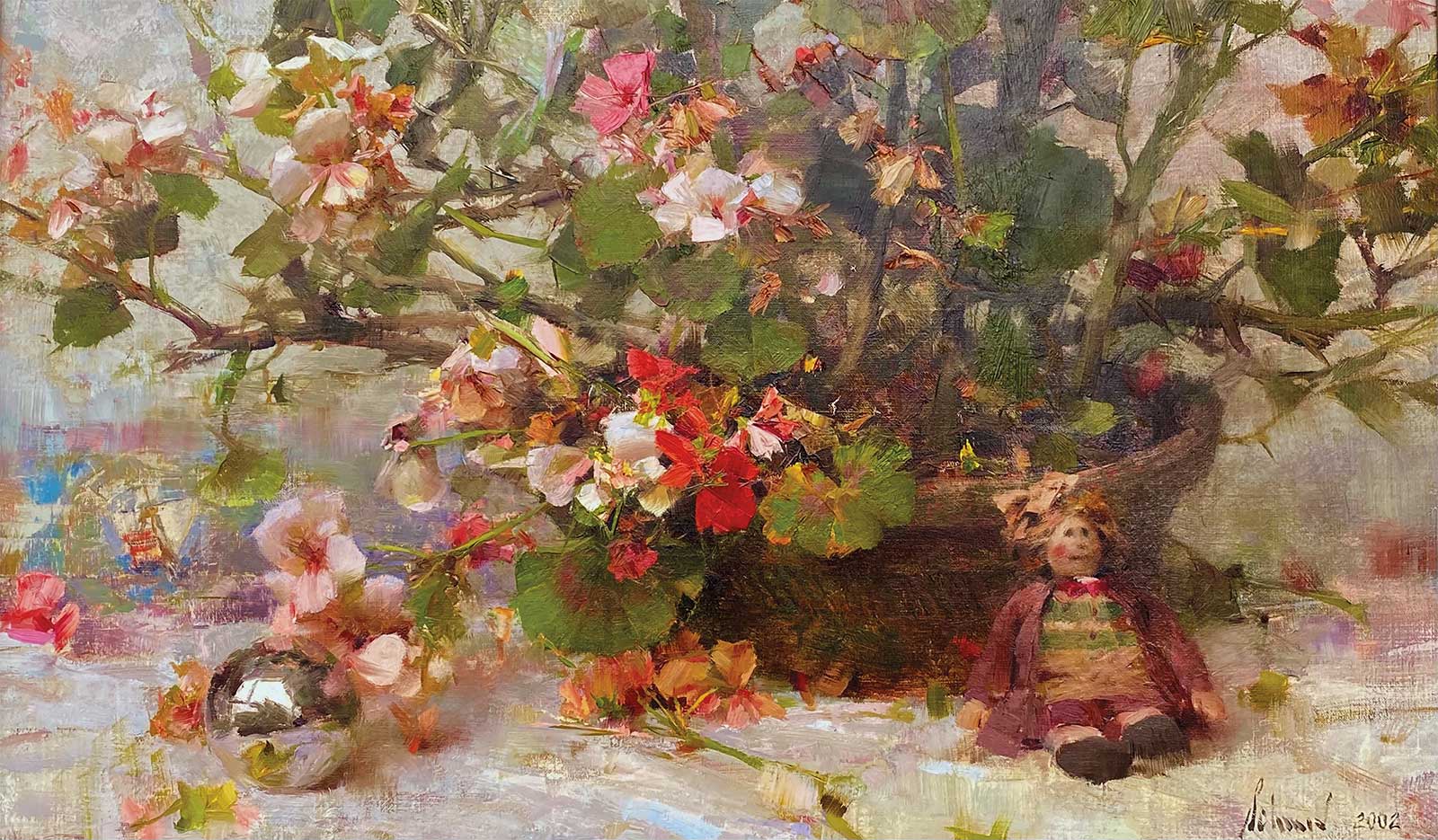 West Wind Fine Art, Winter Geraniums, oil, 12 x 20", by Richard Schmid.
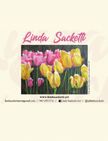
Chicago-based artist Linda Sacketti is known for her bold brushstrokes and expressive paintings. She uses strong colors to capture her subjects and the emotion of the scene. Each painting is created from photographs that she takes herself. “I love my subject to pop off the canvas so I use vivid colors and I keep the background very stylistic,” Sacketti explains. “Everything in nature inspires me, whether it’s a flower, landscape or animal. I’m always trying to push myself to try something new.”
Sacketti’s suggestion for collectors is to find a piece that speaks to you and brings you joy, peace and/or a sense of well-being. “Art is very personal,” she says, “and everyone has their own reaction to a piece, so go with your gut and buy what you love.”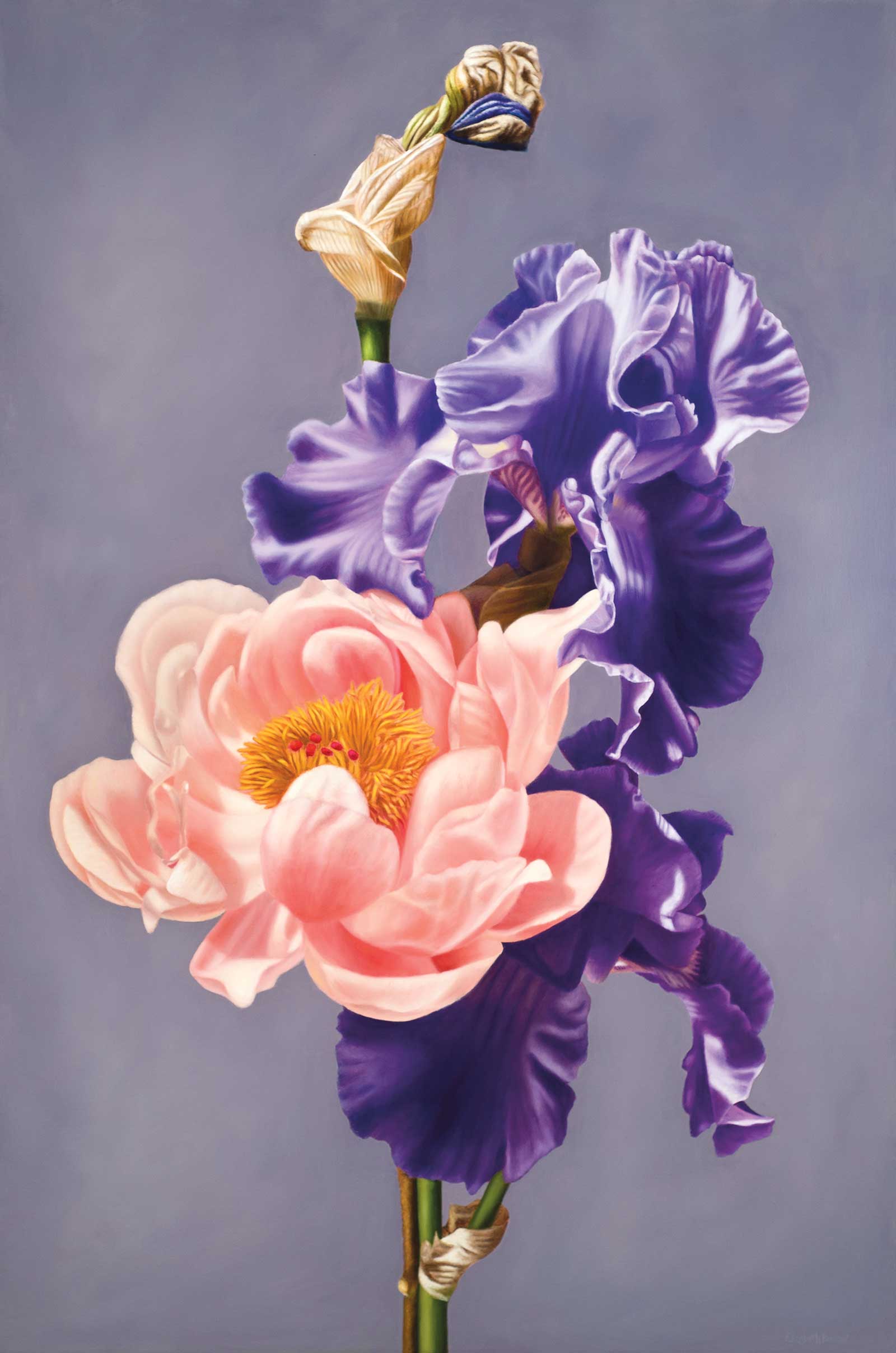 Elizabeth Barlow, Arabesque, oil on linen, 36 x 24"
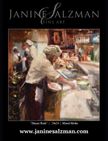
The white poppies pictured in Poppies in the Wild inspired Janine Salzman with their colorful shapes as they were dancing in the wind. “Seeing things is the way I learn, the way I understand things around me,” she says. “Many times, I will run into something I may have overlooked before, or it will work beautifully in a painting. It is these magical moments that I find most challenging and exciting to put on canvas.”
When collecting, she says, “No matter the genre, when you buy a piece of art that speaks to your heart, you are always buying right. There are a variety of reasons; technical ability, point of view, subject matter and use of light, to name a few. Good art stays good throughout time.”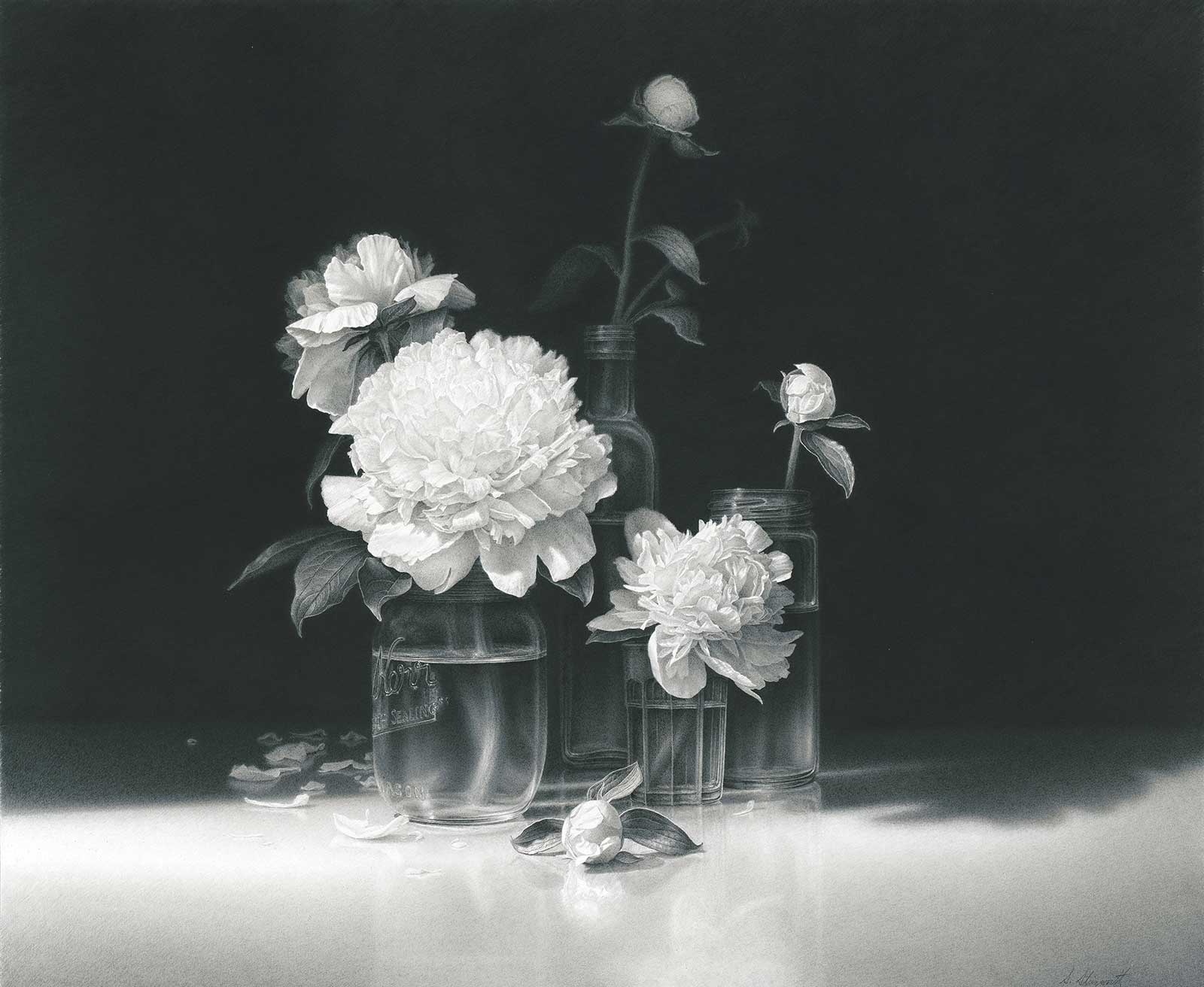 LewAllen Galleries, White Flowers and Glassware, graphite on board, 25 x 30", by Skip Steinworth
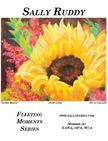
With great reverence for nature, California artist Sally Ruddy creates her vibrant paintings. She responds to the subject in a sensual way rather than literal, feeling her way through a painting. “What is the magic in its being there? What is it that calls out? Why is it speaking to me?” Ruddy asks herself. “And then, there’s the magic of sitting at your easel, making the commitment and starting to work. The art happens. It begins to bloom. You make decisions along the way. But sometimes you go into your own zone; you are almost unconscious of what you’re doing.”
Soft brushstrokes and an airy, effortless blending of colors contribute to an environment focused on emotional response and personal narrative. Omitting fine details in the scenery, Ruddy creates a setting that is otherworldly, transporting her viewers into her intimate memories of family and self. Dreamlike and sentimental, Ruddy’s paintings vibrate with color and intrinsic emotion.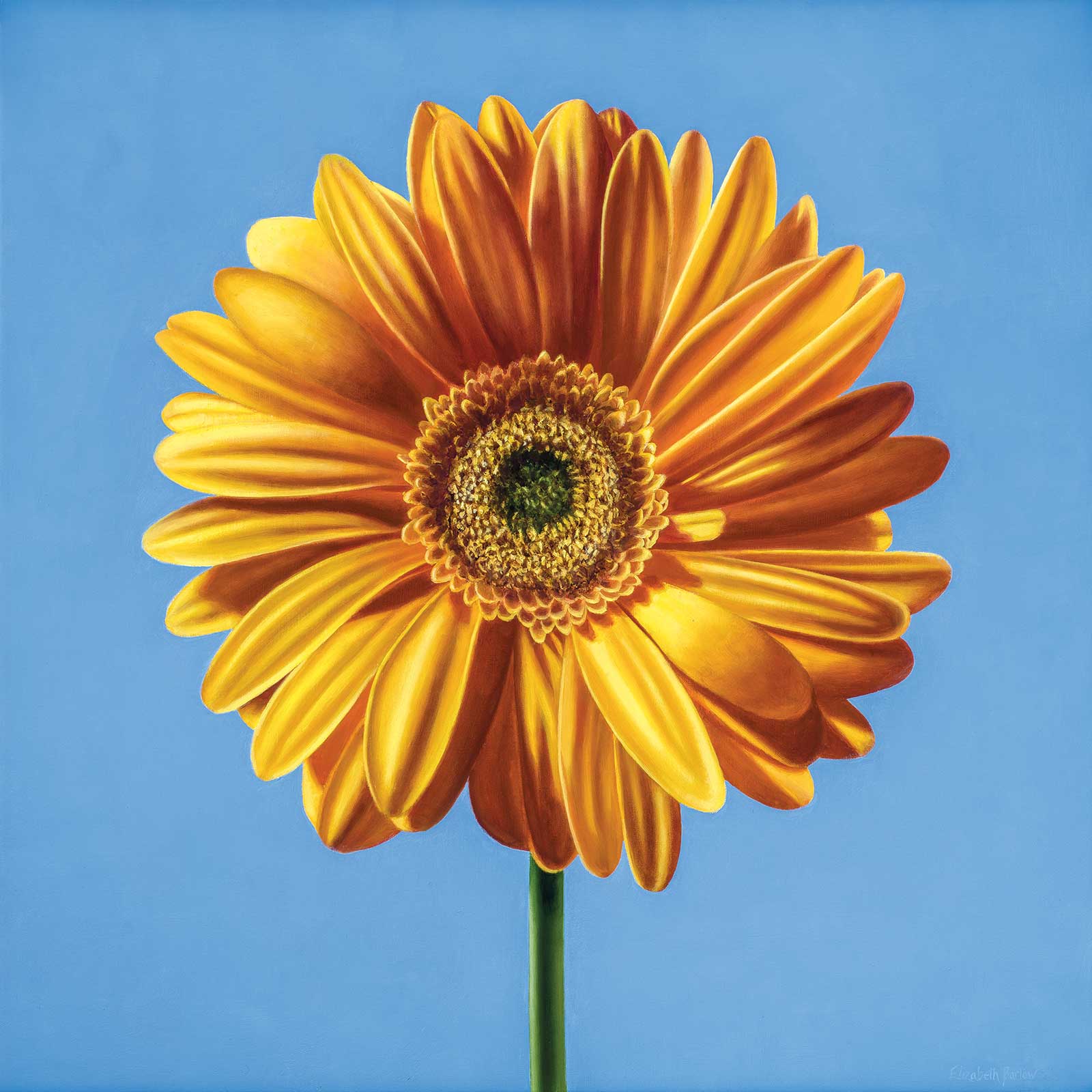 Elizabeth Barlow, Let the Sunshine In, oil on linen, 24 x 24"
The late artist Richard Schmid, whose works are available at West Wind Fine Art, had a fascination for painting the flowers in his own garden, and included unique still life objects from his private collection. He always painted the arrangements directly from life to capture the true colors of nature. “Probably when you see a garden in bloom, or a flower arrangement, most of us see flowers first, which is only natural because the blossoms are the reason we have gardens to begin with,” said Schmid. “But as an artist, when I look at a garden or a bunch of flowers I’m going to paint, I always concentrate on the leaves, because the leaves are the hard part.”
West Wind Fine Art gallery owner Kristen Thies states, “My advice to art collectors interested in floral paintings, is to seek and research artworks from master painters like Richard Schmid, who are recognized in the fine art world.”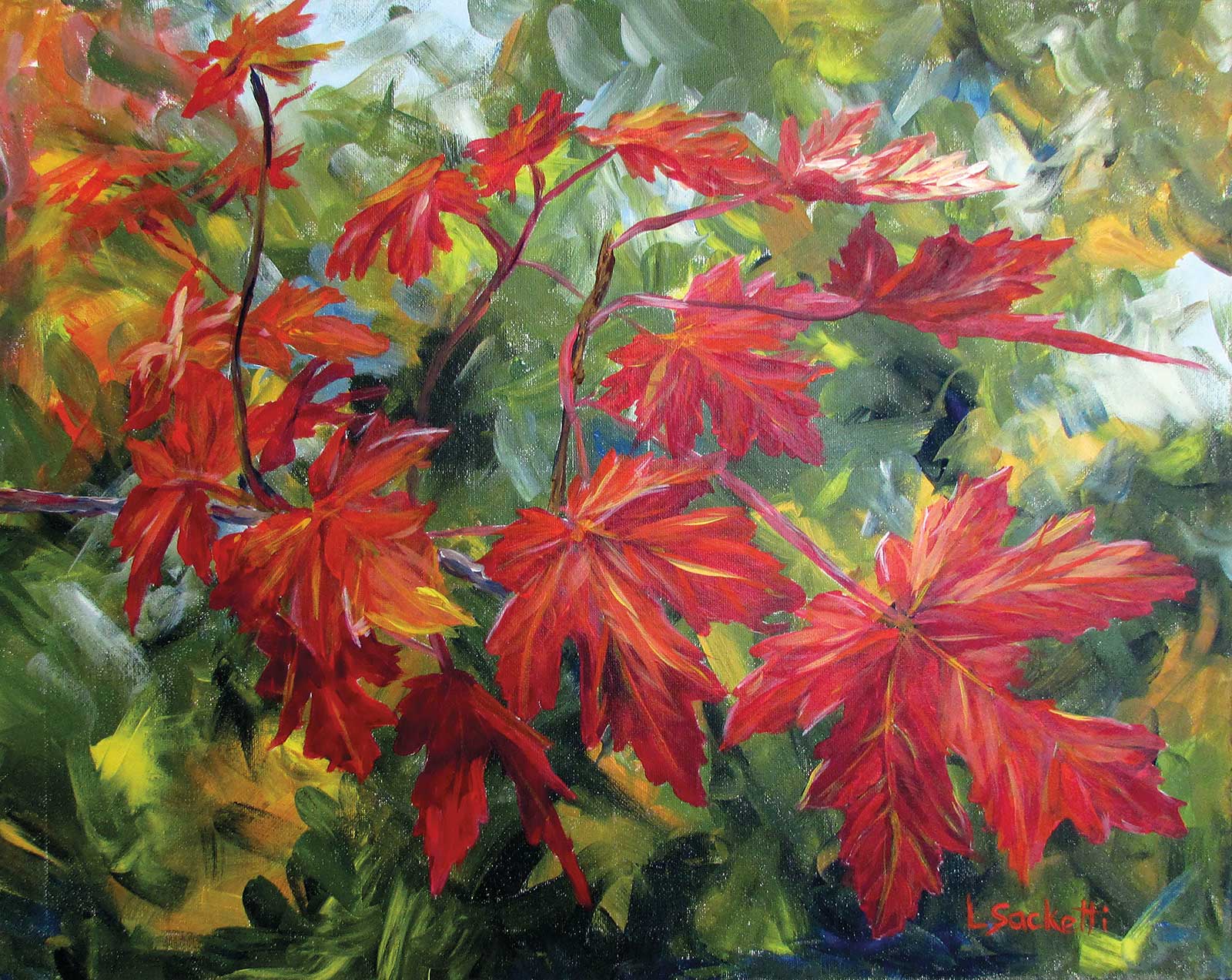 Linda Sacketti, Autumn Blaze, acrylic on canvas, 16 x 20"
Artist Fred Wessel’s good friend and mentor, Jack Beal, once told him that he “‘set out to make paintings that were so beautiful they couldn’t be ignored.’ Jack’s words rang especially true during the isolation that we all felt as COVID emerged…a time when beauty was needed. With my Flower Icon Series,” says Wessel, “I am attempting to merge the natural allure of flowers with the iconic beauty of works created in the early renaissance. I try to incorporate some of that meditative beauty by playing off the ever-changing light that radiates from gold leaf and the colors which illuminate the picture’s surface.”
For collecting, Wessel says, “I believe that a successful floral painting transports the viewer into the sublime world of nature, while supplementing that journey through the revelation of new visual discoveries and relationships each time the painting is viewed anew.”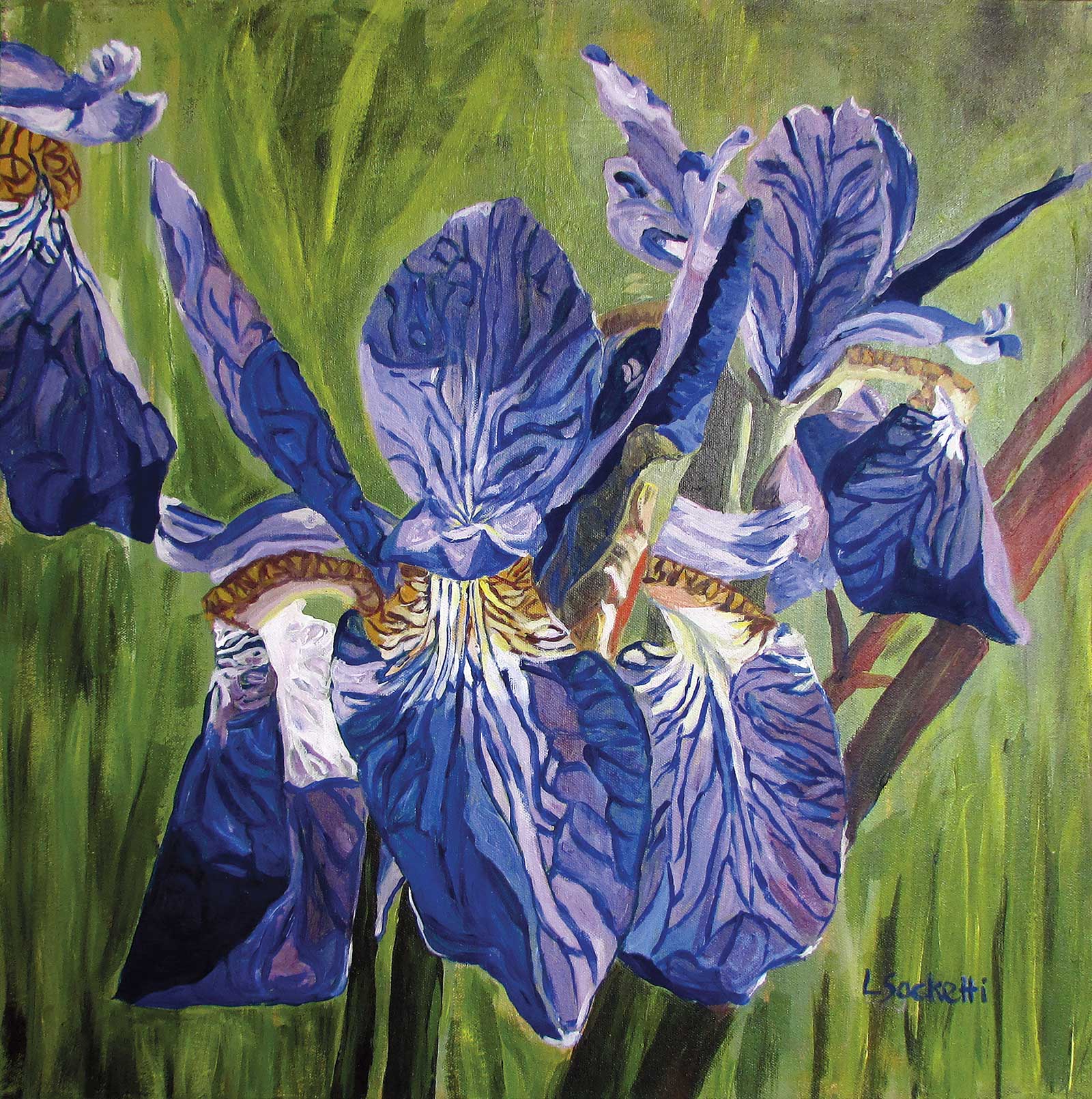 Linda Sacketti, Purple Iris, acrylic on canvas, 24 x 24"
Pennsylvania artist Lisa Hannick believes that flowers are among the most difficult subjects to paint. “They are delicate yet strong, diaphanous yet possess solid and unique structures,” she says. “Their very existence is a paradox. Their loveliness is so elusive and yet brightens every corner. If I can capture all of this on canvas, bring a smile to your face and warmth to your heart, then mission accomplished.”
The artist has a beautiful flower garden at her home. Further on her property, she’s established a Zen garden surrounded by flowering shrubs. “Some people say that gardening is my passion,” she says, “But I say that painting flowers is my first love. And painting flowers that I have grown and nurtured mean even more.”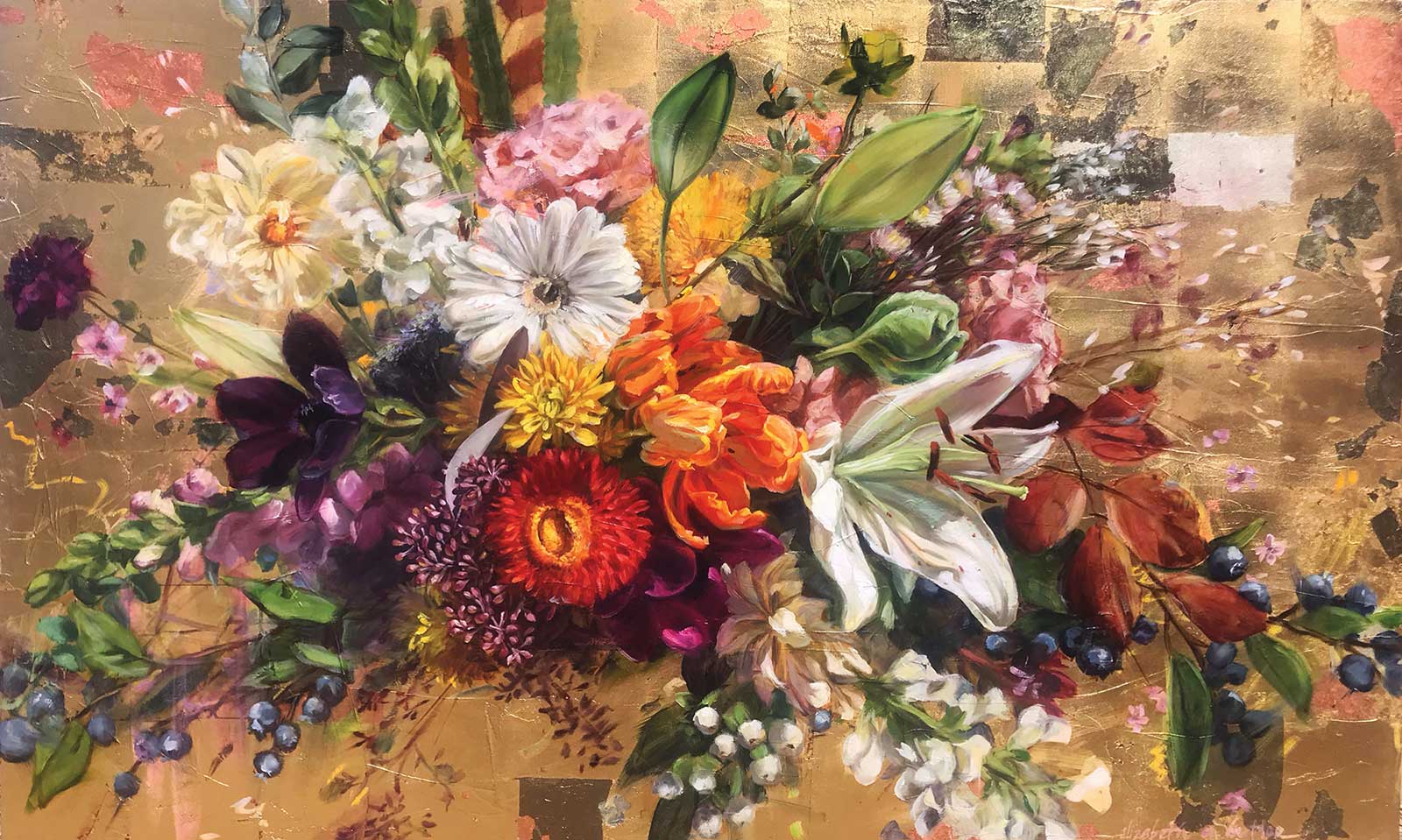 Celebration of Fine Art, Essence, oil and gold leaf on wood, 36 x 60", by Elizabeth Butler
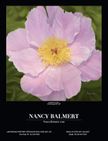
Nancy Balmert loves color, and “what better way to paint colors than flowers,” she says. “Flowers are gentle, fragrant, dazzling and alive. When you paint a flower, you bring all of that inside.” The flowers found in her paintings come from photos that she’s taken, usually in her travels. She’s devoted many vacation days to searching out flowers at places like castles, gardens and arboretums. “But there are times when I’ve just noticed a flower blooming in a yard or by a sidewalk, taken out my camera and started shooting pictures,” Balmert explains “I’ve even pulled out my cellphone while on a bike ride.”
Balmert notes that in painting a still life, arrangement and lighting are key elements the artist can control to achieve the desired effect. She says, “In my photos, nature is in charge. It takes incredible patience to find just the right flower and setting. The flower needs to be perfect and so does the sunlight and shadows, but when I find the right combination, the result can be breathtaking!”
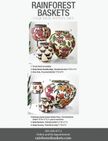
All of the materials featured in the collection at Rainforest Baskets are gathered, sourced and collected in the Darién rainforest. Handmade by Panama’s rural Wounaan tribe, the vibrant and intricate baskets are the result of ancient weaving traditions passed through generations of the Indigenous peoples of the Darién Rainforest.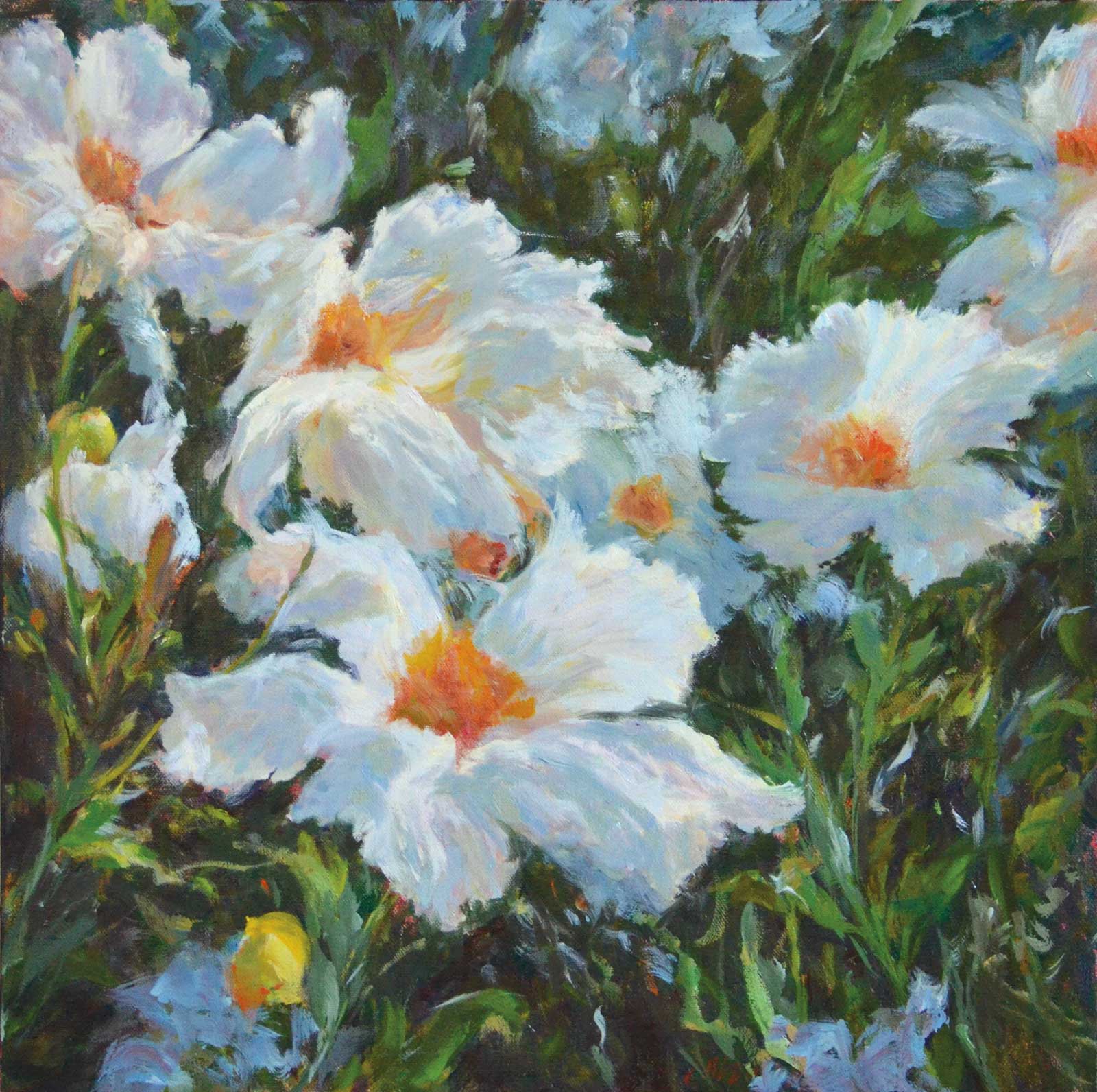 Janine Salzman, Poppies in the Wild, mixed media, 20 x 20"
Originally designed for practical use, Wounaan baskets have evolved into revered works of art admired by individuals and museums around the world. Gaining their inspiration from the nature that surrounds them, the Wounaan women who weave baskets sometimes incorporate ancient Colombian pottery designs into their baskets. Weavers also create florals that reflect the exotic plant and animal life found in the rainforest. Using needles to sew only the supplest of fibers from the native Chunga and Naguala palms, each basket can take months, or even several years to complete. “By focusing our efforts on the small Wounaan tribe,” says co-owner Jennifer Kuyper, “Rainforest Baskets strives to support these truly talented artists to ultimately provide you with only the most authentic pieces—direct from the source.”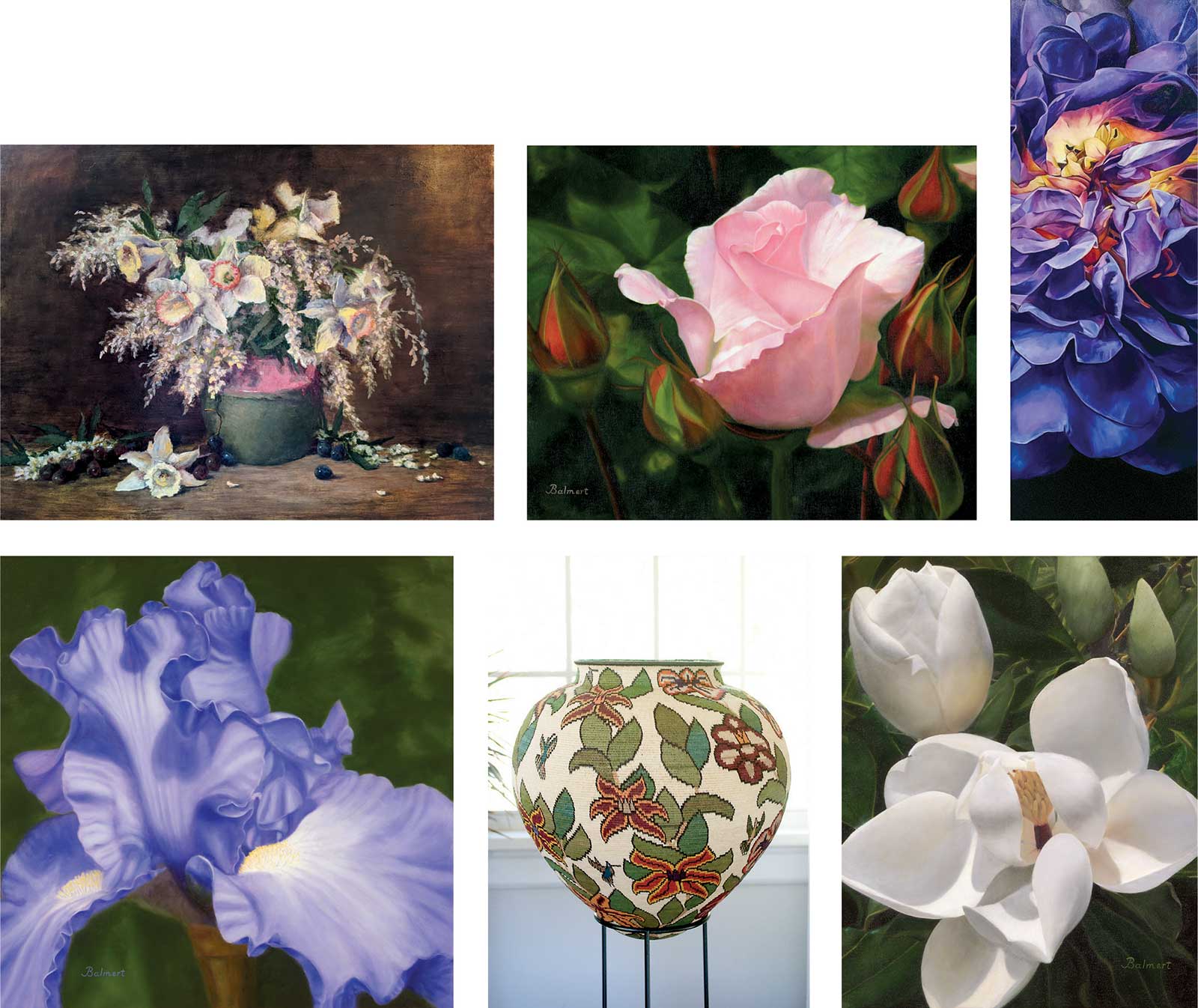 Top row from left: Lisa Hannick, Daffodils and Andromeda, oil on board, 14 x 18" ; Nancy Balmert, First Prize Rose, oil, 20 x 24" ; Anne Neilson Fine Art, Regina, oil on canvas, 60 x 20", by Stephanie Neely. Bottom row from left: Nancy Balmert, Sugar Blues Iris, oil, 24 x 24" ; Rainforest Baskets, Rich Floral, mixed media, 13 x 13", by Brisaidita Mejia; Nancy Balmert, Southern Magnolias, 14 x 11"
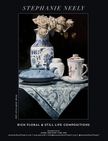
Deeply inspired by Vermeer, Rembrandt and Caravaggio, Stephanie Neely, who is represented by Anne Neilson Fine Art, is a contemporary artist whose style, subject matter and superlative talent authentically honors the great masters who have influenced her life’s work. Neely’s still life and floral compositions in rich, high realism detail are imbued with symbolism and dramatic chiaroscuro effect that would make even the mercurial Caravaggio smile. As Neely states, “My paintings feature flowers that have been selected and placed intentionally in vessels of glass or clay. Flowers are the cherished jewels of nature, and they inspire a sense of wonder and relief in pausing to reflect on their elegant beauty. I found that I could be still in their presence and reflect for a moment on life’s greater purpose. I invite you to consider these words and to be still with me in the presence of God’s most beautiful gifts in the form of these painted worlds.”
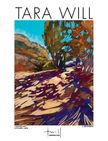
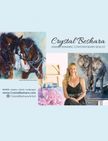
Anne Neilson Fine Art gallery director, Cassandra Richardson says, “Floral and still life paintings are part of the cannon of art history—subjects which will always endure. It is important when collecting in this genre, to choose a painter that both honors this grand tradition and to recognize a contemporary artist whose vision is timeless. Stephanie Neely is the quintessence of both.”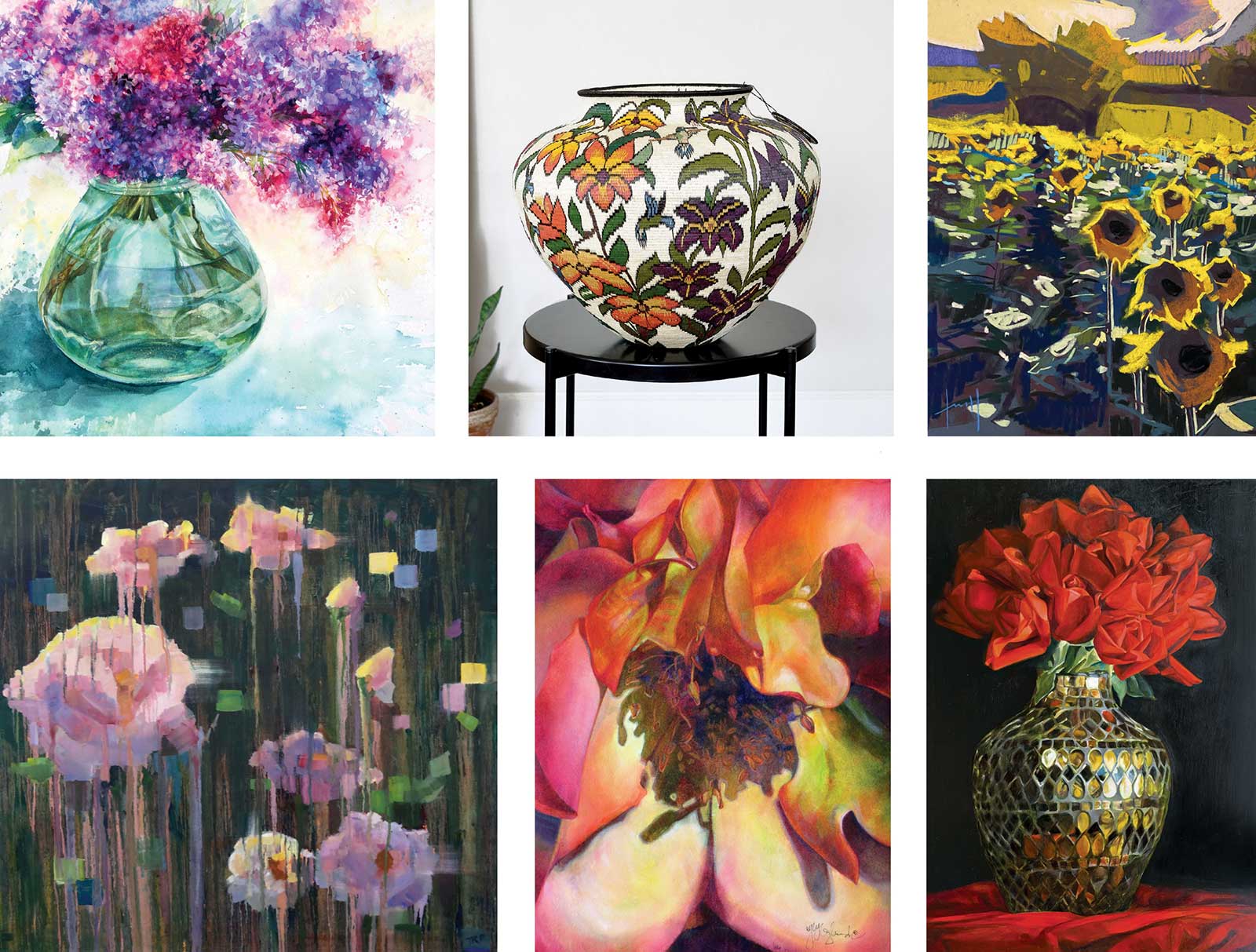 Top row, from left: Crystal Beshara, Enchanted, watercolor on cold pressed paper, 18 x 18"; Rainforest Baskets, Floral Butterfly, mixed media, 15 x 18", by Telvinia Piraza; Tara Will, End of Days, soft pastels, 25½ x 19½". Bottom row, from left: Terry Romero Paul, Pink Chablis, oil, 24 x 24" ; Jeanne Hyland, Betty Boop Rose, watercolor, 15 x 11"; Anne Neilson Fine Art, Cinnabar, oil on panel, 36 x 24", by Stephanie Neely.
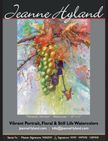
“Flowers exude such character and endlessly fascinating natural color combinations and shapes,” says artist Jeanne Hyland, “and they invariably elevate people’s spirits.” Hyland loves finding the personality of individual flowers and revealing those observations with viewers by enhancing colors, shapes and rhythm. Petals often appear like drapery moving on dancers. Leaves act as supporting structures or wings.
Hyland says, “Collecting floral and botanical paintings requires you to first look for something that speaks to you emotionally and to your own experience with gardens, nature or even special occasions associated with certain flowers or plants. Personally, I find that they also mirror ourselves both with how they appear as three-dimensional sculptural subjects and their character and gestures…”
Artist Terry Romero Paul’s series of abstracted florals and landscapes was developed during the time of the pandemic. “Finding myself, like many artists, with a lot of extra time in my studio, I began to contemplate breaking down my paintings into pieces of color and adding movement with the layers of dripping paint as a backdrop,” says Paul. “I gave myself permission to be open and to challenge myself.” 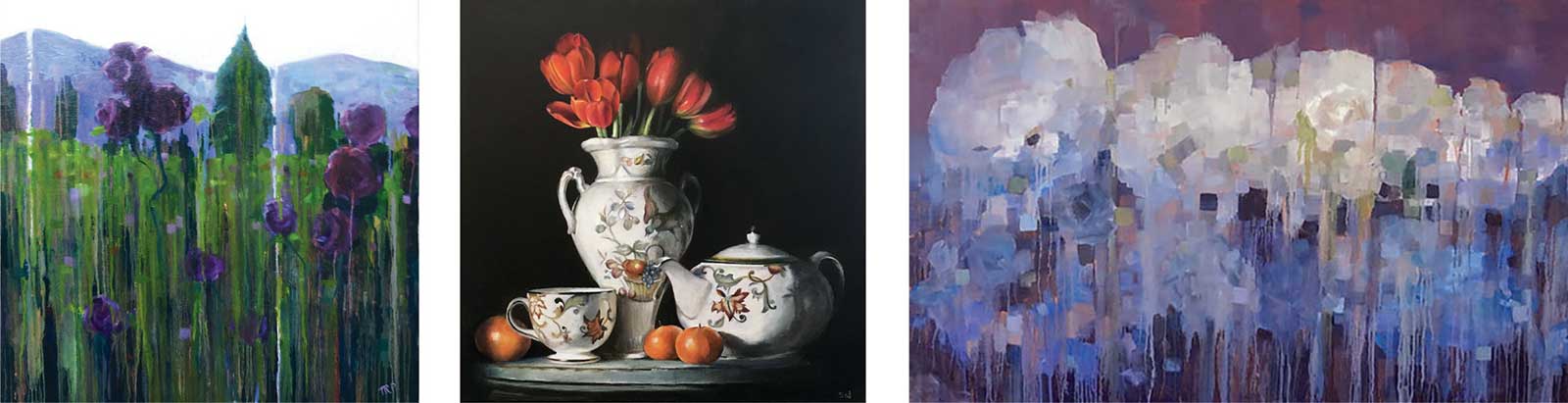 From left: Terry Romero Paul, Burgundy Rose, oil, 24 x 24" ; Anne Neilson Fine Art, Teapot, Tulips & Tangerines, oil pastel on canvas, 30 x 30", by Stephanie Neely; Terry Romero Paul, Purple Flower Haze, oil, 30 x 40"
As an artist, Paul never wants to stop growing and feels that this series is the culmination of all her past studies and genres taken to the next level. “I work with oil paints on canvas and I love the ability to manipulate the paint with its buttery consistency to get the vibrant or muted colors I desire,” she says. “I feel this technique with the muted dripping, represents the tears of the last two years that we all have shed, and my bright palette speaks of the light we have inside of us when we choose to see it.” —
Featured Artists & Galleries
Anne Neilson Fine Art
532 Governor Morrison Street, Suite 110
Charlotte, NC 28211, (704) 496-9181
www.anneneilsonfineart.com
Arden Gallery
129 Newbury Street, Boston, MA 02116
(617) 247-0610, www.ardengallery.com
Celebration of Fine Art
18400 N. Hayden Road
Scottsdale, AZ 85255
(480) 443-7695, www.celebrateart.com
Crystal Beshara
L’Orignal, ON, (613) 276-1568
crystal@crystalbeshara.com
www.crystalbeshara.com
Elizabeth Barlow
elizabeth@elizabethbarlowart.com
www.elizabethbarlowart.com
Fred Wessel
wessel@hartford.edu
www.fredwessel.com
Garvey|Simon
165 Seaman Avenue, New York, NY 10034
(917) 796-2146, www.garveysimon.com
Janine Salzman
(949) 310-5649
www.janinesalzman.com
Jeanne Hyland
Santa Fe, NM
info@jeannehyland.com
www.jeannehyland.com
LewAllen Galleries
1613 Paseo De Peralta, Santa Fe, NM 87501, (505) 988-3250
www.lewallengalleries.com
Linda Sacketti
(871) 691-1732
lindasackettiart@gmail.com
www.lindasacketti.art
Lisa Hannick
lisa@hannickfineart.com
www.hannickfineart.com
Nancy Balmert
www.nancybalmert.com
Rainforest Baskets
Portland, OR
(505) 920-6712
www.rainforestbaskets.com
Sally Ruddy
info@sallyruddy.com
www.sallyruddy.com
Somerville Manning Gallery
(302) 652-0271
www.somervillemanning.com
Tara Will
www.tarawill.com
Terry Romero Paul
(818) 515-4970
romeropaul@aol.com
www.trpart.com
West Wind Fine Art
kristen@westwindfineart.com
www.westwindfineart.com
Powered by Froala Editor